05 / Ultherapy
Ultherapy Skin Tightening
A non-invasive, ultrasound-based treatment that lifts and tightens by targeting the deeper structural layers of the skin.
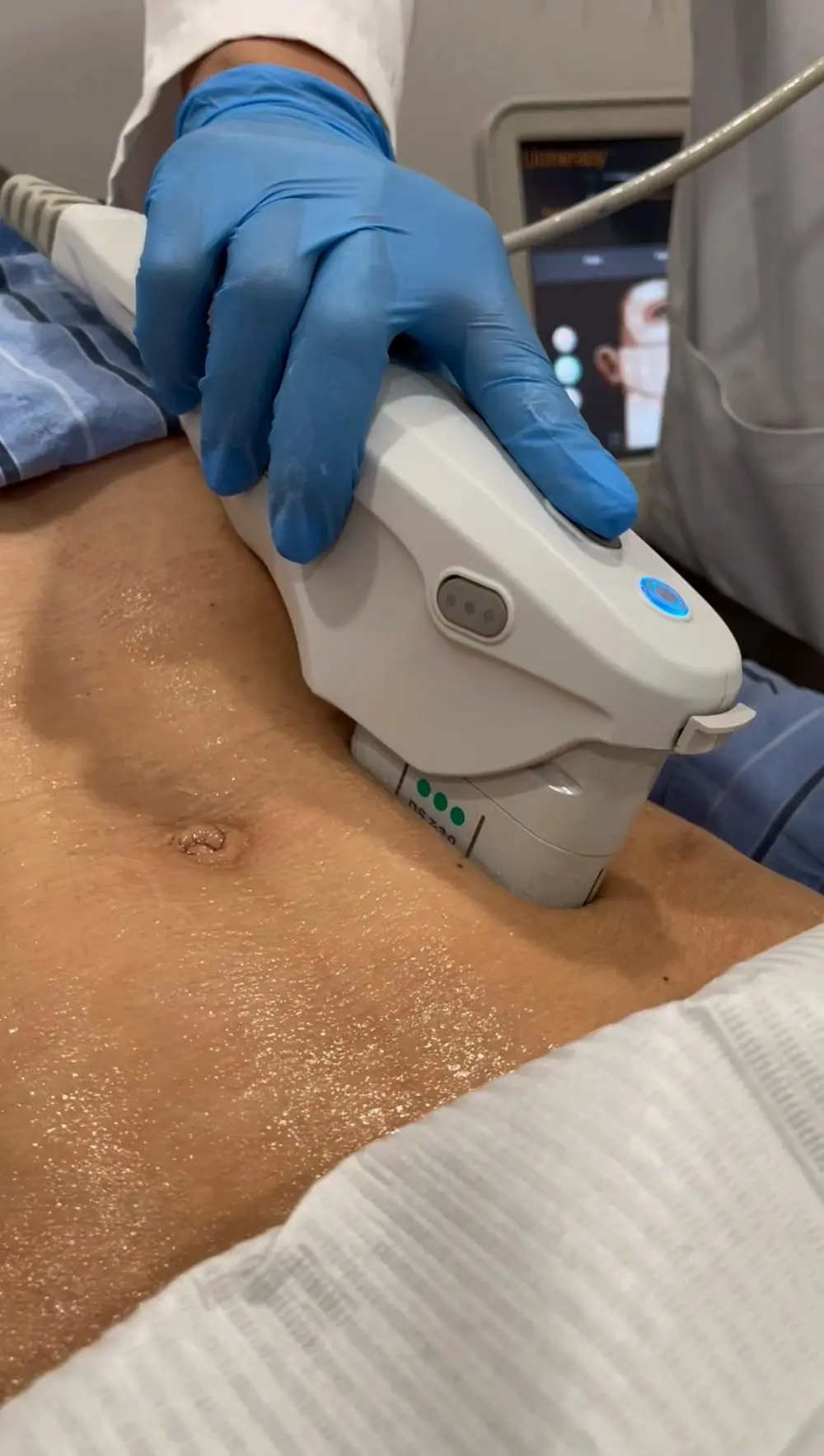 Real patient
At a glance
- Approach
- Non-invasive
- Sessions
- 1–2
- Results build
- 2–3 months
- Downtime
- None
- Visit length
- 60–90 minutes
What it is
How Ultherapy works at Annaré.
Ultherapy uses focused ultrasound, not laser. Energy is delivered past the surface to the deeper support layers — including the SMAS, the same layer addressed surgically in a facelift — where controlled heating triggers new collagen formation. The skin surface is left intact, which is why there is no recovery period.
Because the mechanism is collagen remodelling, the result is gradual. Some tightening may be apparent early, but the meaningful change appears over two to three months as new collagen matures. Most patients need one to two sessions, and many then return after a year or more.
A skin tightening consultation here starts with an honest assessment of how much laxity is actually present. Ultherapy suits early to moderate laxity well and cannot substitute for surgery when tissue descent is significant — and the provider will tell you plainly when that is the case rather than sell you a session that will disappoint.
Areas treated
- Brow
- Eye area
- Mid-face
- Jawline
- Submental
- Neck
- Décolleté
- Chest
- Abdomen / stomach
- Arms
Full detail
What is offered.
Treatment areas
Ultrasound, not laser- Eyes and browTargeted lifting above the brow to open the eye area, often chosen alongside or instead of a neuromodulator brow lift.
- Full faceComprehensive treatment across the mid and lower face, aimed at overall firmness and definition.
- NeckDirected at laxity and banding on the neck, one of the areas patients most often want addressed.
- Full face and neckThe most complete option, treating the face and neck together so the result stays consistent along the jawline.
What to expect
From consultation to result.
Step 01
Candidacy assessment
Skin laxity, tissue quality, and your goals are assessed directly. If Ultherapy will not deliver what you are hoping for, you will be told that at the consultation rather than after the session.
Step 02
Treatment
Ultrasound imaging is used to visualise the layers before energy is delivered, so treatment is placed accurately. Most patients feel brief heat or a prickling sensation during delivery. Comfort measures are discussed beforehand.
Step 03
Collagen remodelling
You can return to normal activity the same day. Mild tenderness or slight swelling can occur for a few days. Firming develops over two to three months, with a review at that point.
Questions
Ultherapy Skin Tightening — frequently asked.
How is Ultherapy different from laser?
Laser works on or near the surface of the skin, targeting pigment and texture. Ultherapy uses focused ultrasound to deliver energy to the deeper support layers without breaking the surface, which is why it addresses laxity rather than tone and requires no recovery.
Does it hurt?
There is a sensation of heat and prickling as energy is delivered, and it is stronger over bonier areas. It is temporary and comfort measures are discussed before treatment. Most patients find it very manageable for the duration of the session.
How long until I see results?
Some tightening can appear early, but the real change develops over two to three months as new collagen matures. It is a treatment that rewards patience rather than one that shows a same-day before and after.
How long do results last?
Typically around a year, sometimes longer. Ultherapy does not stop the ageing process, so most patients repeat treatment periodically to maintain the result.
Am I a candidate?
Ultherapy works best for early to moderate laxity, where skin has begun to loosen but tissue has not significantly descended. If laxity is advanced, no non-surgical device will match a surgical result, and you will be told so directly.
How many sessions will I need?
One to two for most patients. Candidacy and area size determine whether a second session adds value, and that is assessed at the two to three month review rather than assumed up front.
Pricing
Priced around your plan, not a menu.
Dosing, product, and session count vary from patient to patient, so pricing is not posted online — it is confirmed with you directly once your plan is set. Call or book a consultation and you will have the number before anything is scheduled.
Often planned together